
The japanese culture reflected in a warm and serene space
For this projected, I was asked to create a vacation home in Japan, that could be rented by tourists. To fully embrace Japanese culture, living in a japanese inspired retreat is the perfect way to experience Japan.
- Japanese-Inspired Holiday Home Concept -
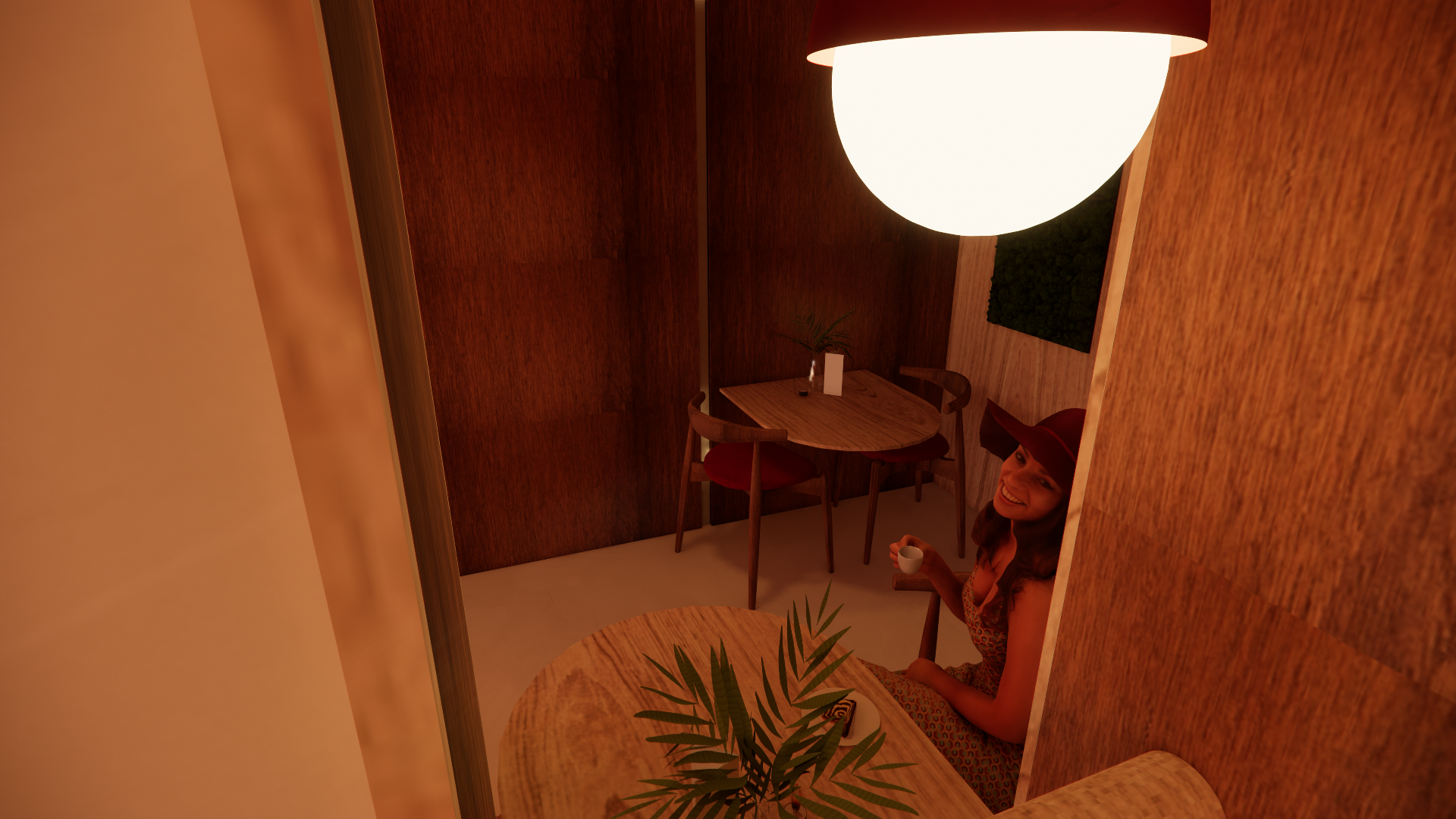
This project draws inspiration from Japanese culture and values, with a strong focus on respect, calm, and balance. Everyday rituals, such as removing shoes before entering a space, reflect a deep respect for place and people, which is translated into a mindful and serene interior design. The use of minimal forms and warm, natural colors creates a calm environment where visitors can slow down and relax.
A key inspiration is the way tradition and modern life coexist in Japan. Historic temples and natural landscapes are seamlessly integrated into contemporary cities, creating a unique balance between nature and urban life. This contrast, between calm and activity, became an important theme within the holiday home design, guiding spatial transitions and atmosphere.
The concept also embraces the Japanese view on imperfection and aging as something valuable rather than flawed. Inspired by the philosophy behind Kintsugi, the holiday home celebrates material honesty and subtle imperfections. The result is a peaceful retreat that reflects Japanese cultural principles while offering a timeless and thoughtful holiday experience.
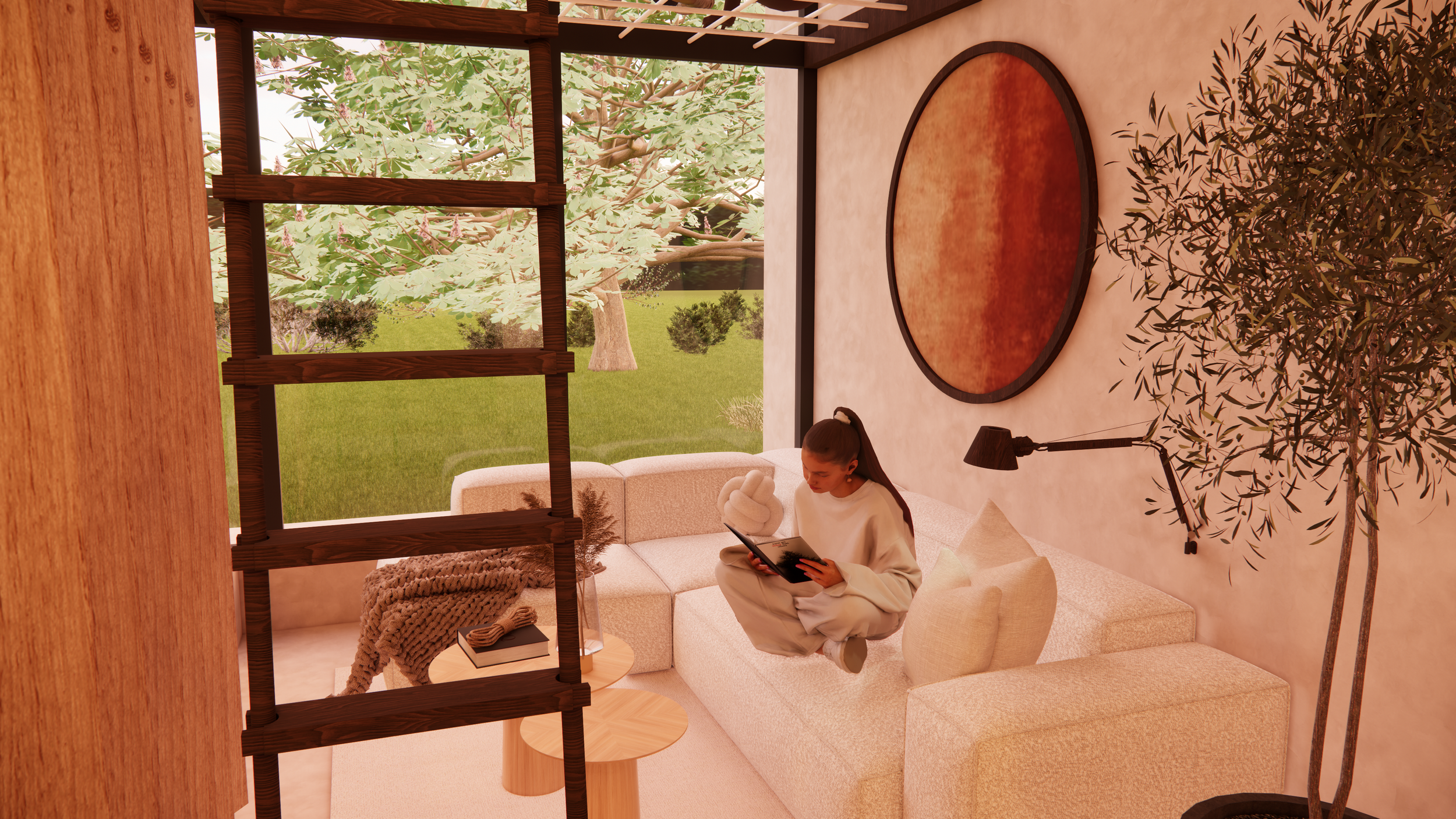
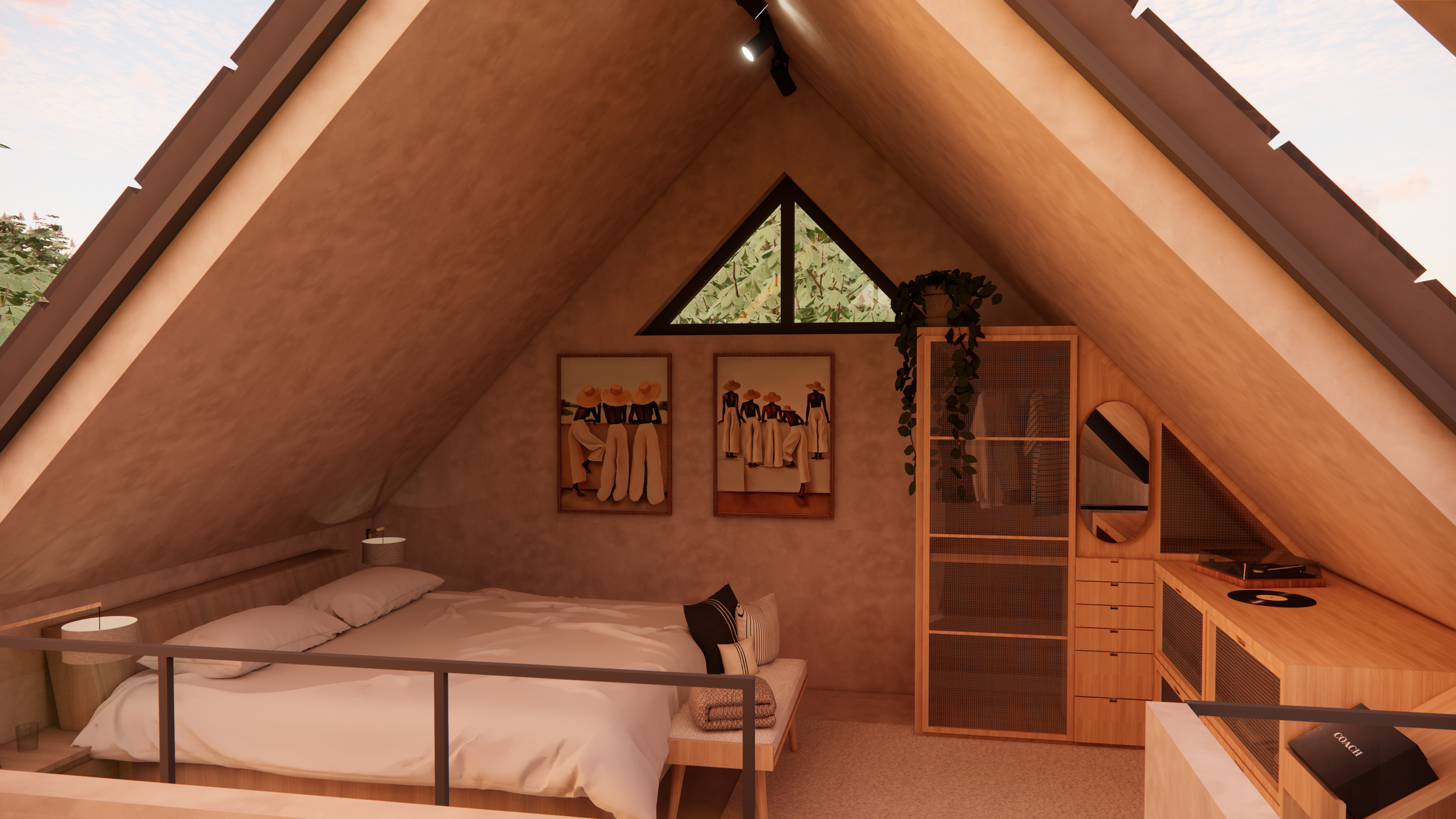
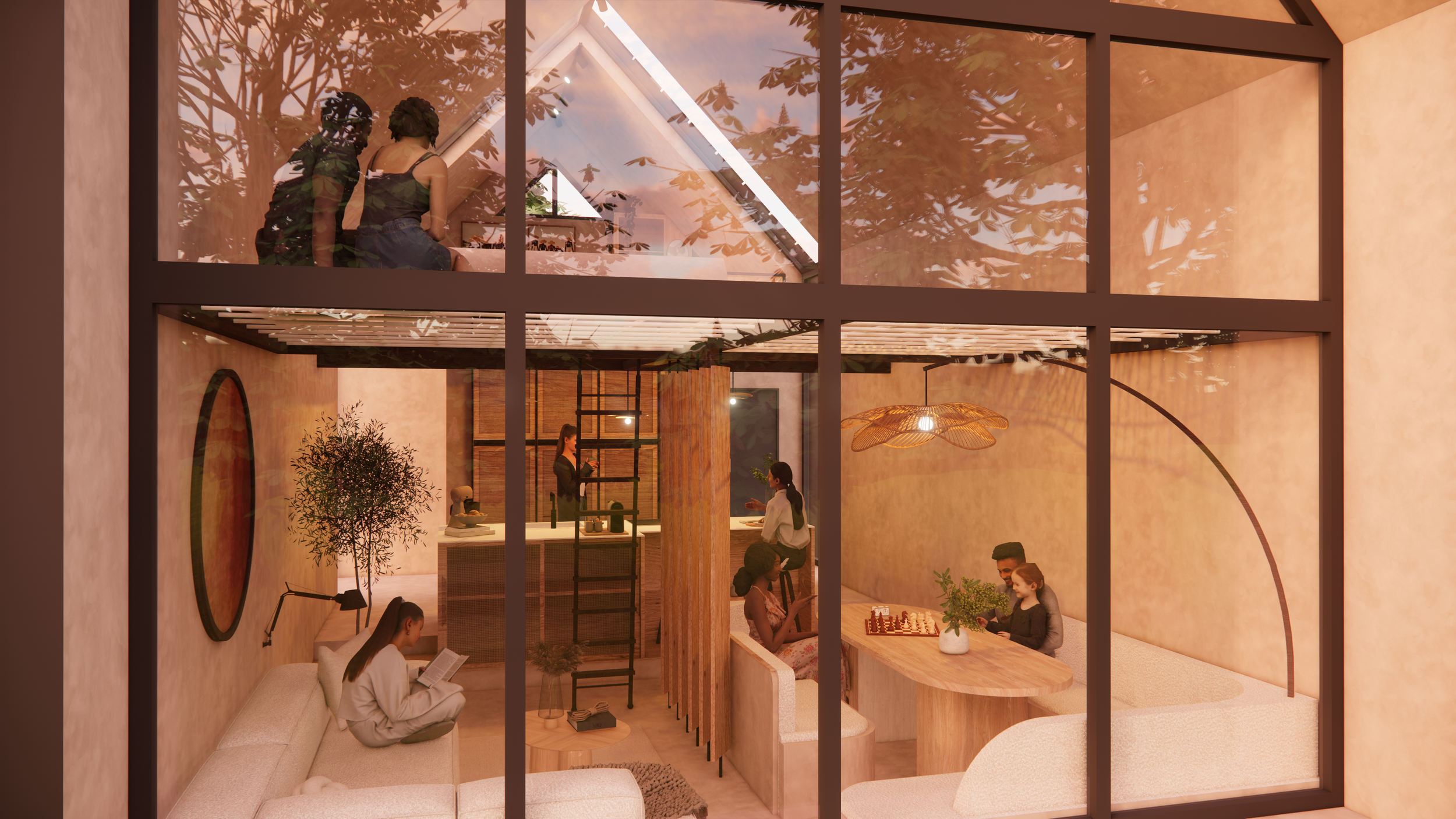
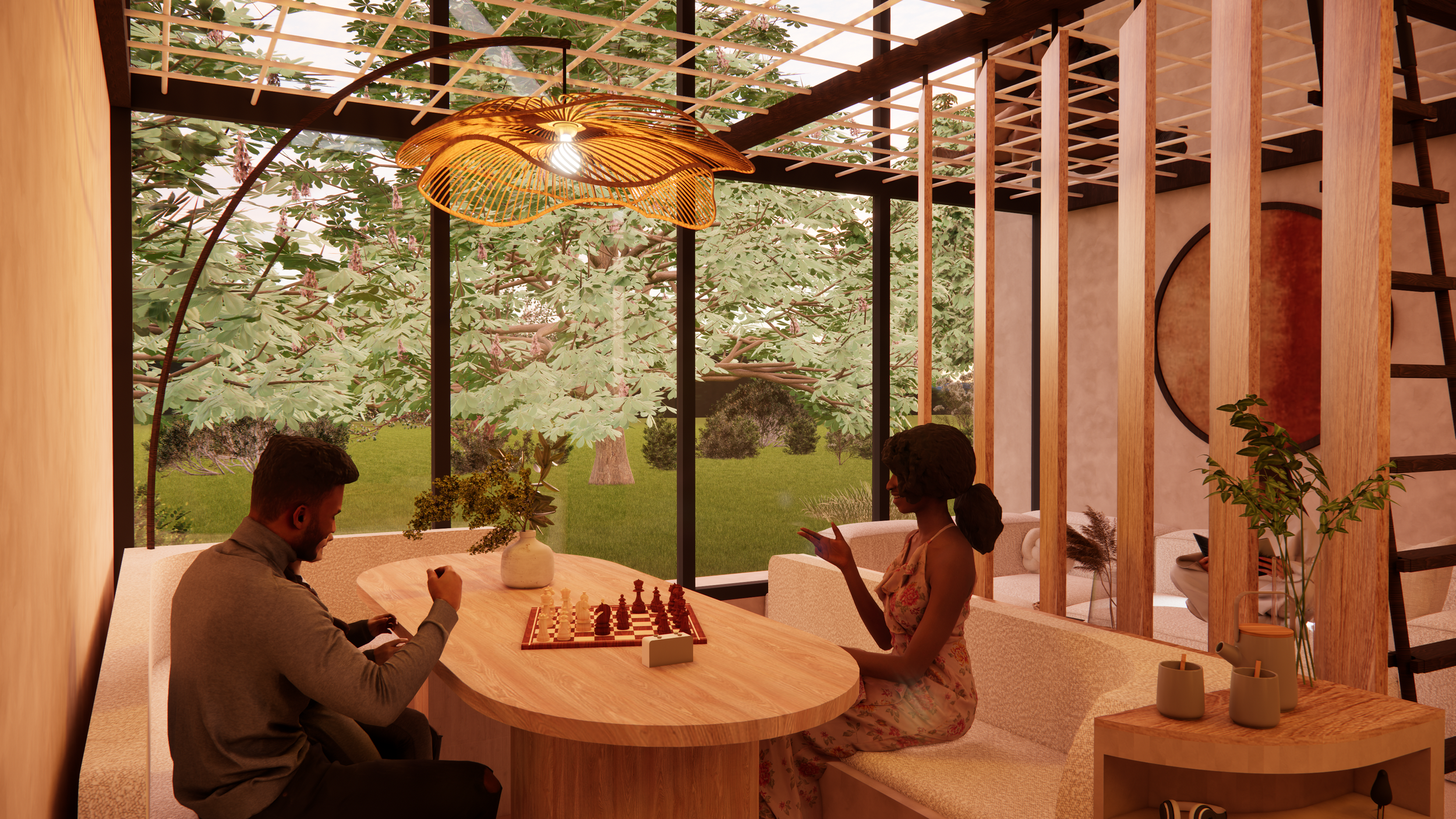
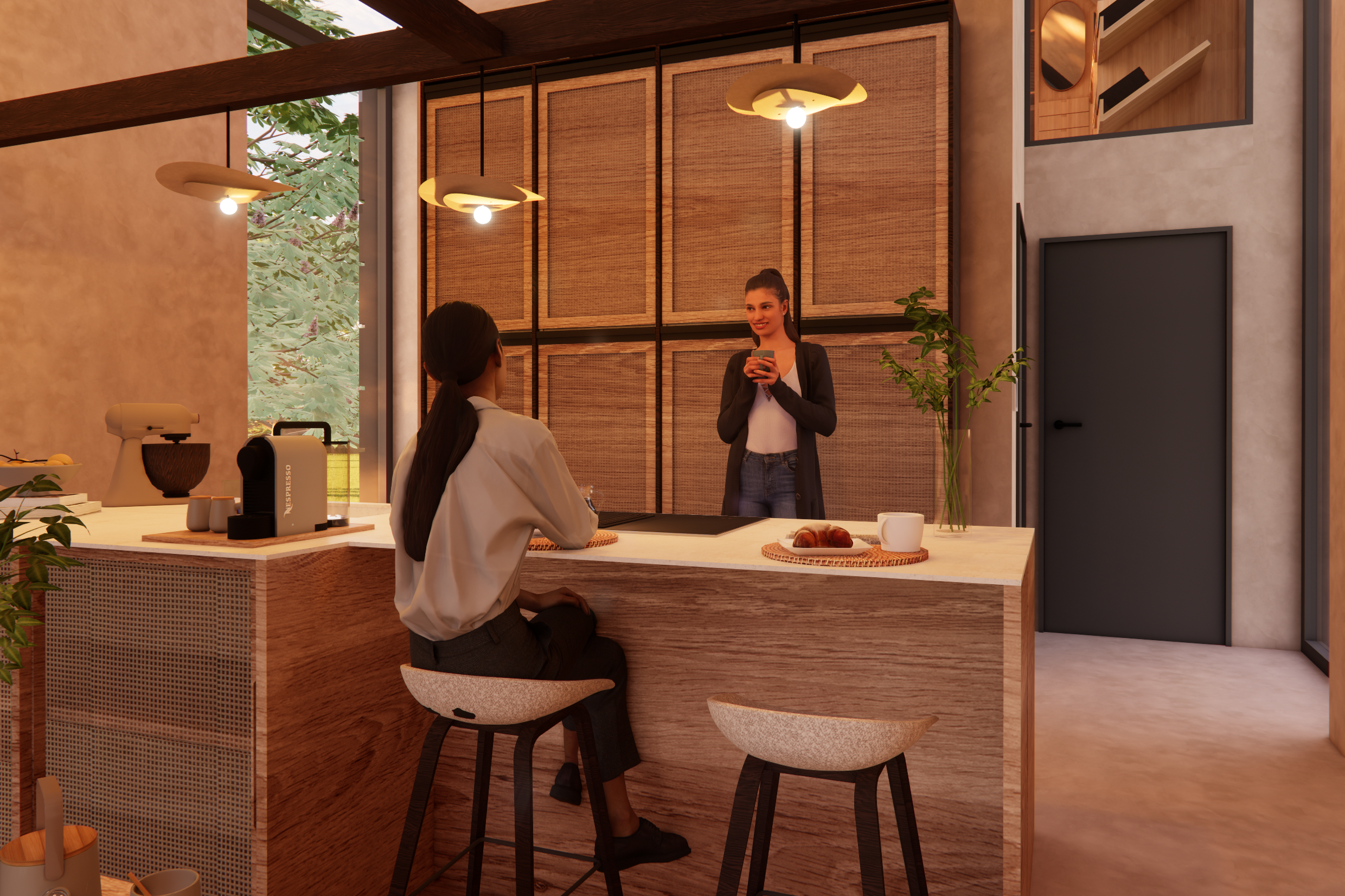
- QR-Code Panorama photo’s -
To enhance the experience of the interior, you can scan the QR codes, which will redirect you to Chaos.com. There, you can explore high-quality rendered images that give the impression of being inside the space.

Living room, dining room and kitchen

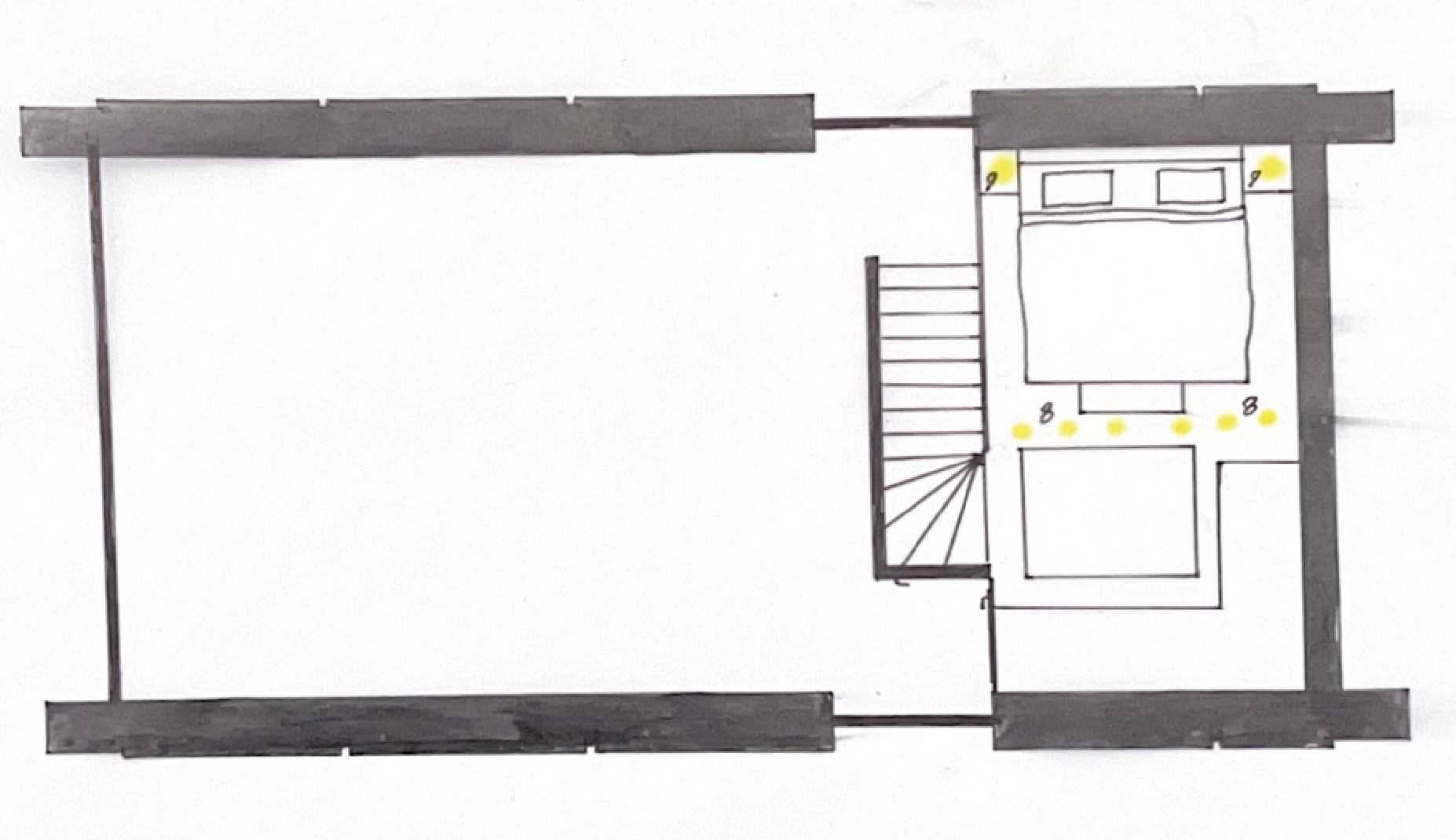
Bedroom/view on the second floor
Click or Scan
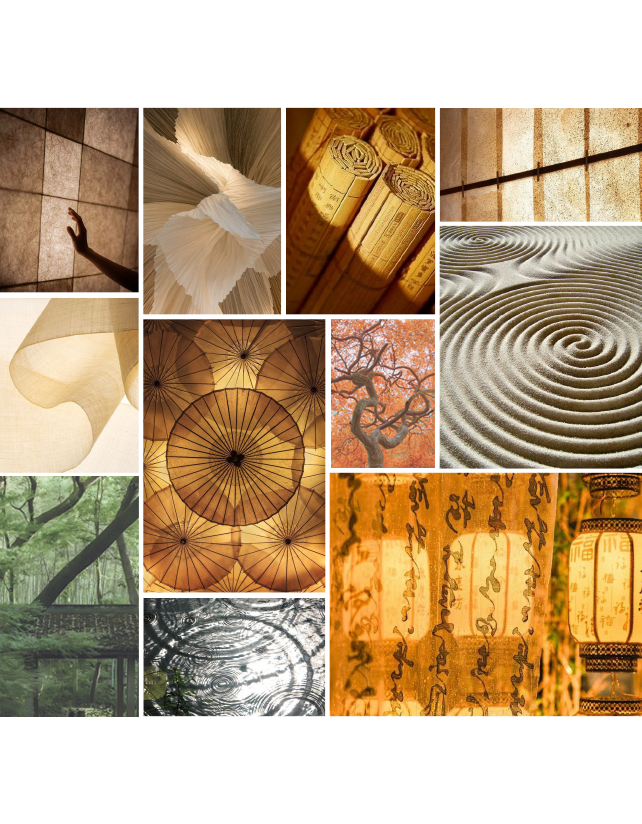
- Concept map -
Calming, harmony, balance, character, personality
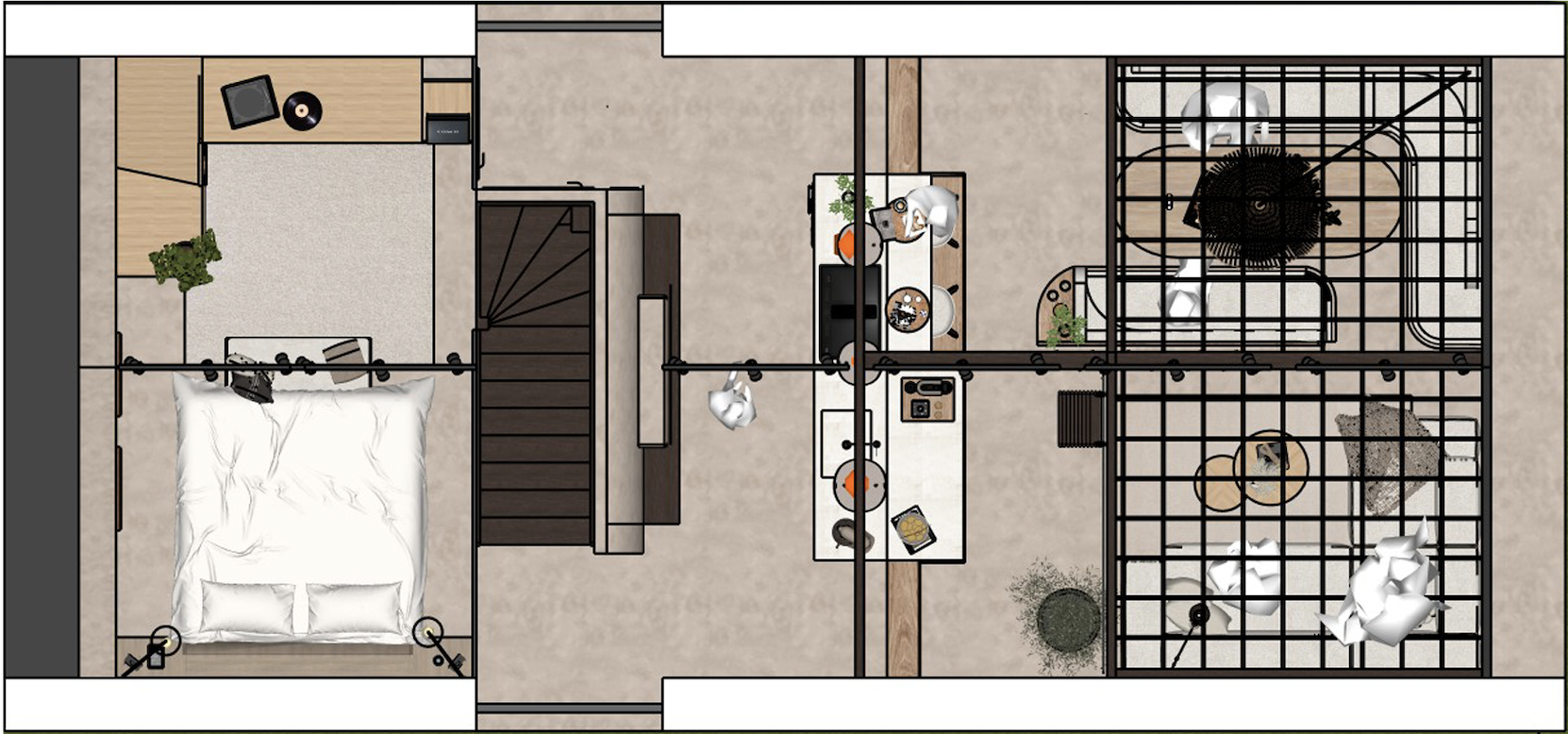
Floorplan
Design inspiration
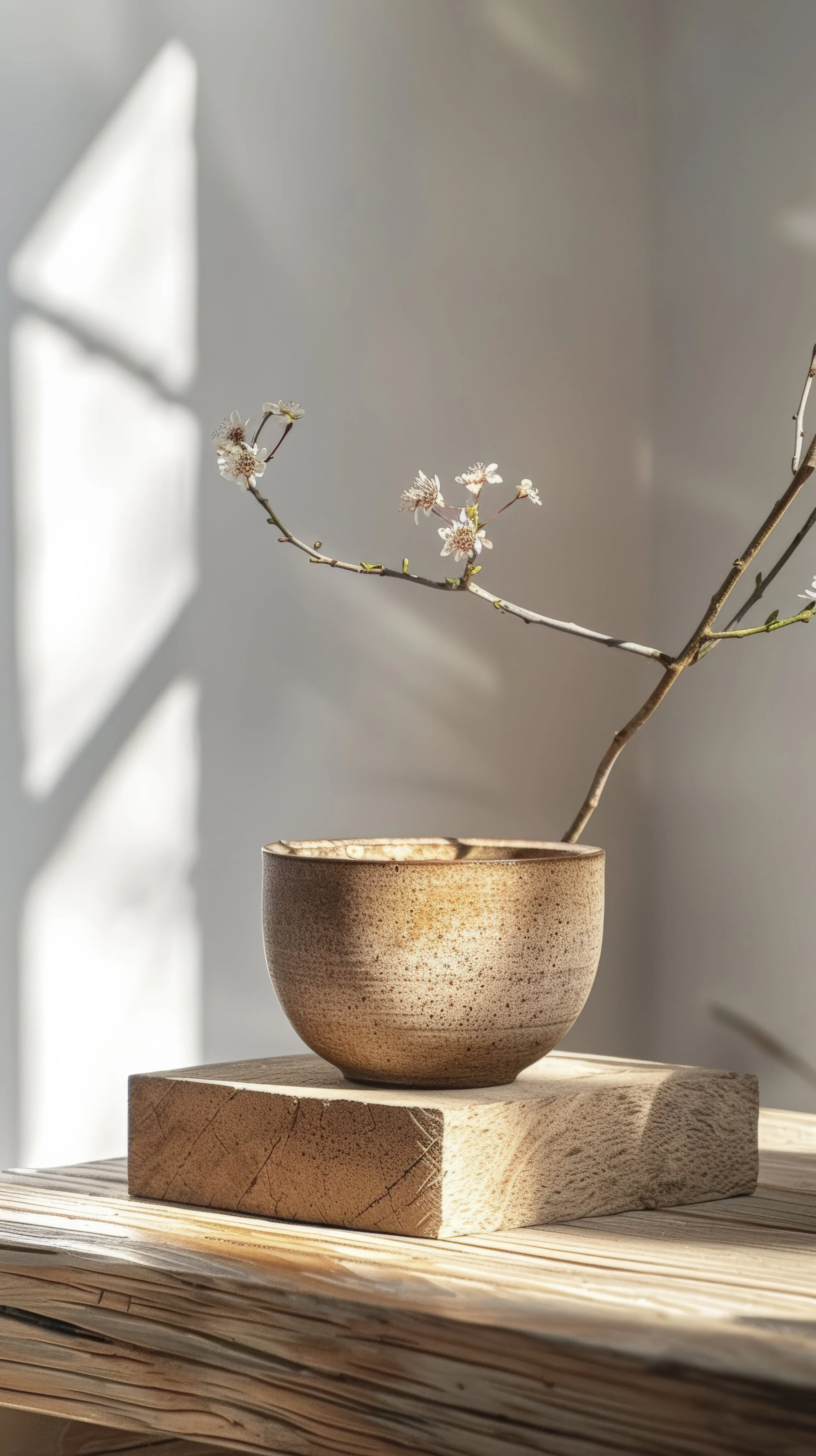
Kintsugi & Wabi-Sabi
Kintsugi and Wabi-Sabi, both well-known approaches to the acceptance of coming and going. This design approach highlights the lived-in aspect of an object or material by accentuating it with gold lines. For this reason, I chose to use wood, stone, and linen, all materials that are natural. These materials also all have one aspect in common: they leave and show their marks. They capture the essence of life in them, like Kintsugi or Wabi-Sabi would, reinterpreting Kintsugi by celebrating imperfection through the natural aging of materials rather than repair.
Inspiration to design:
Wa
Inspiration to design:
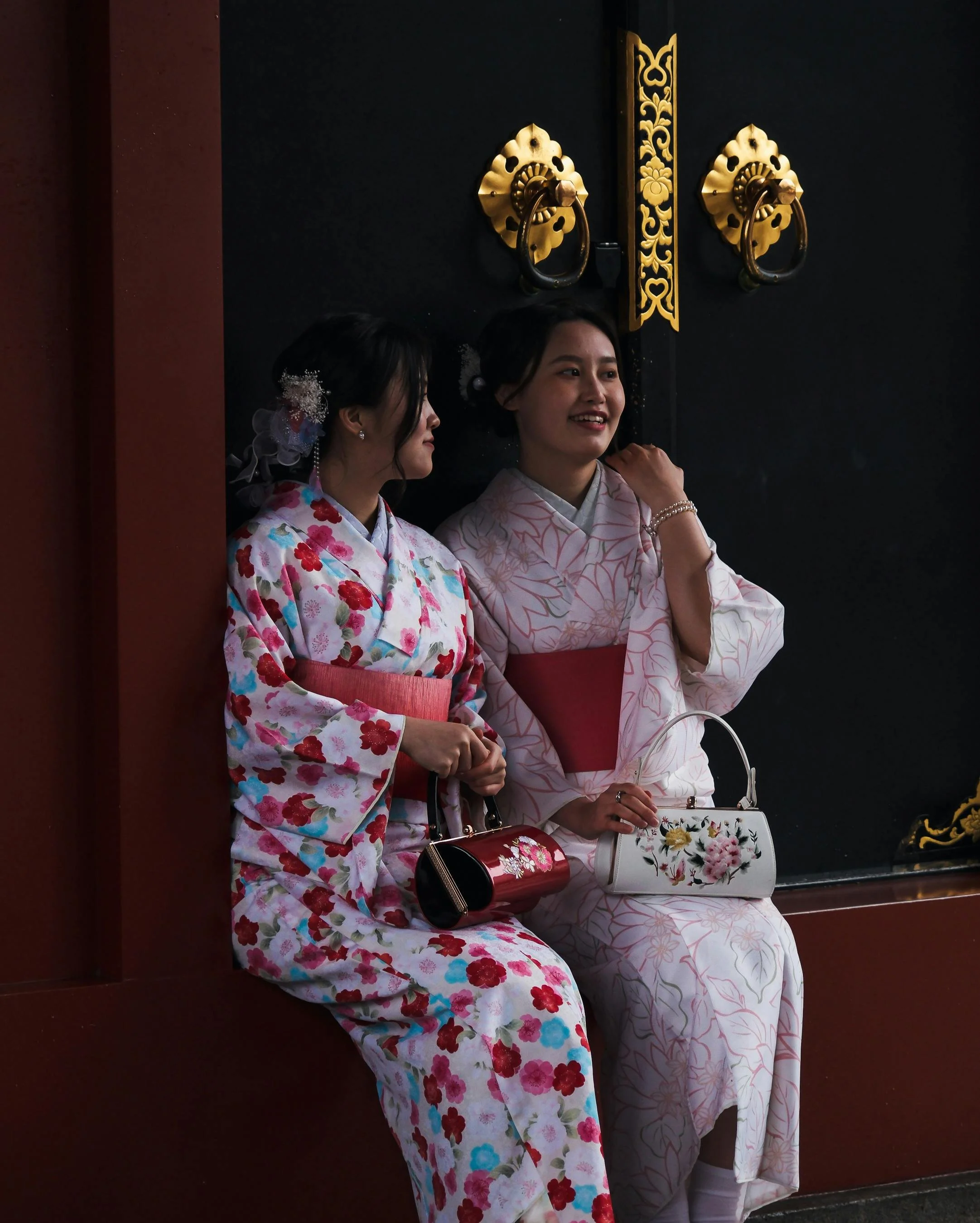
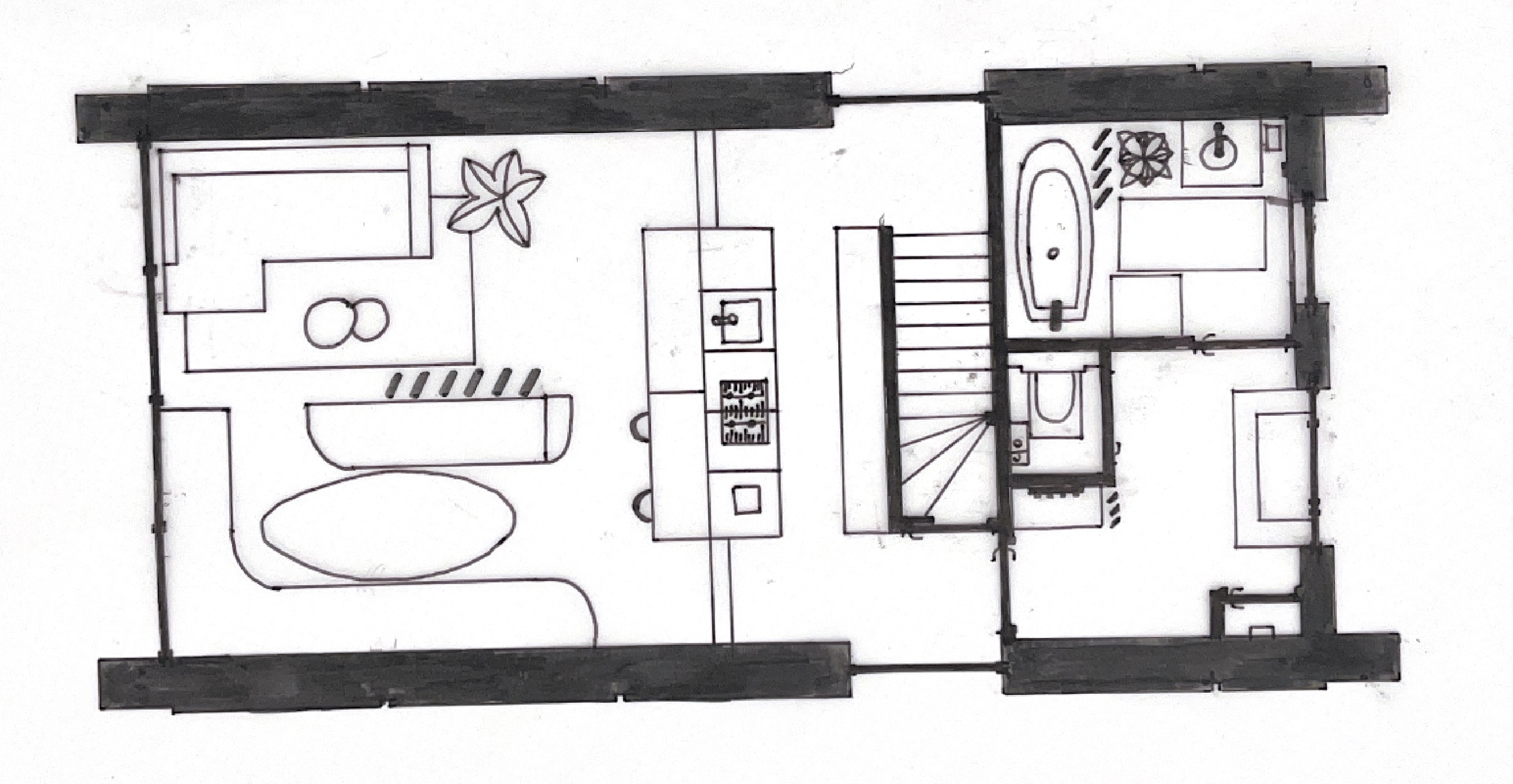
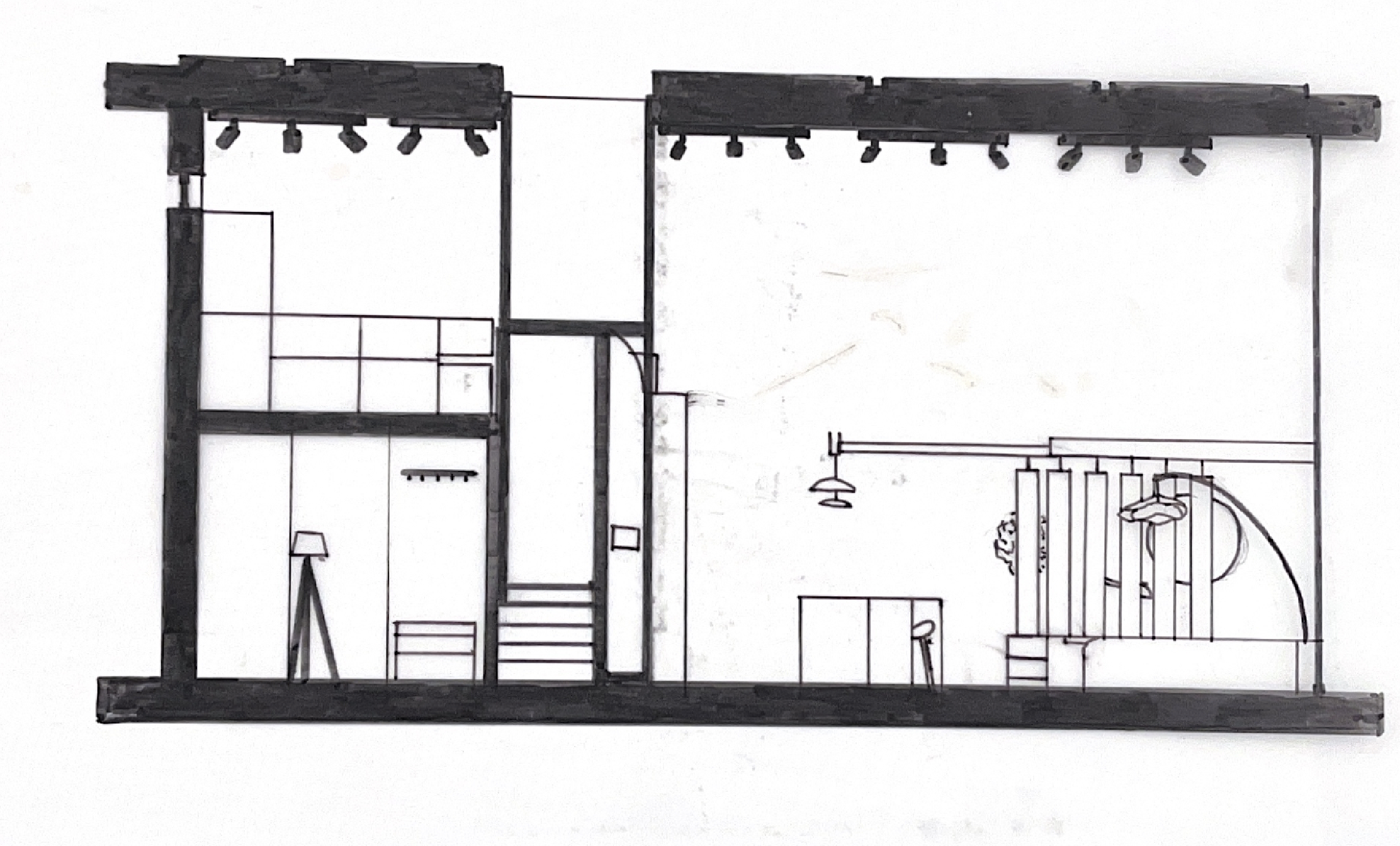
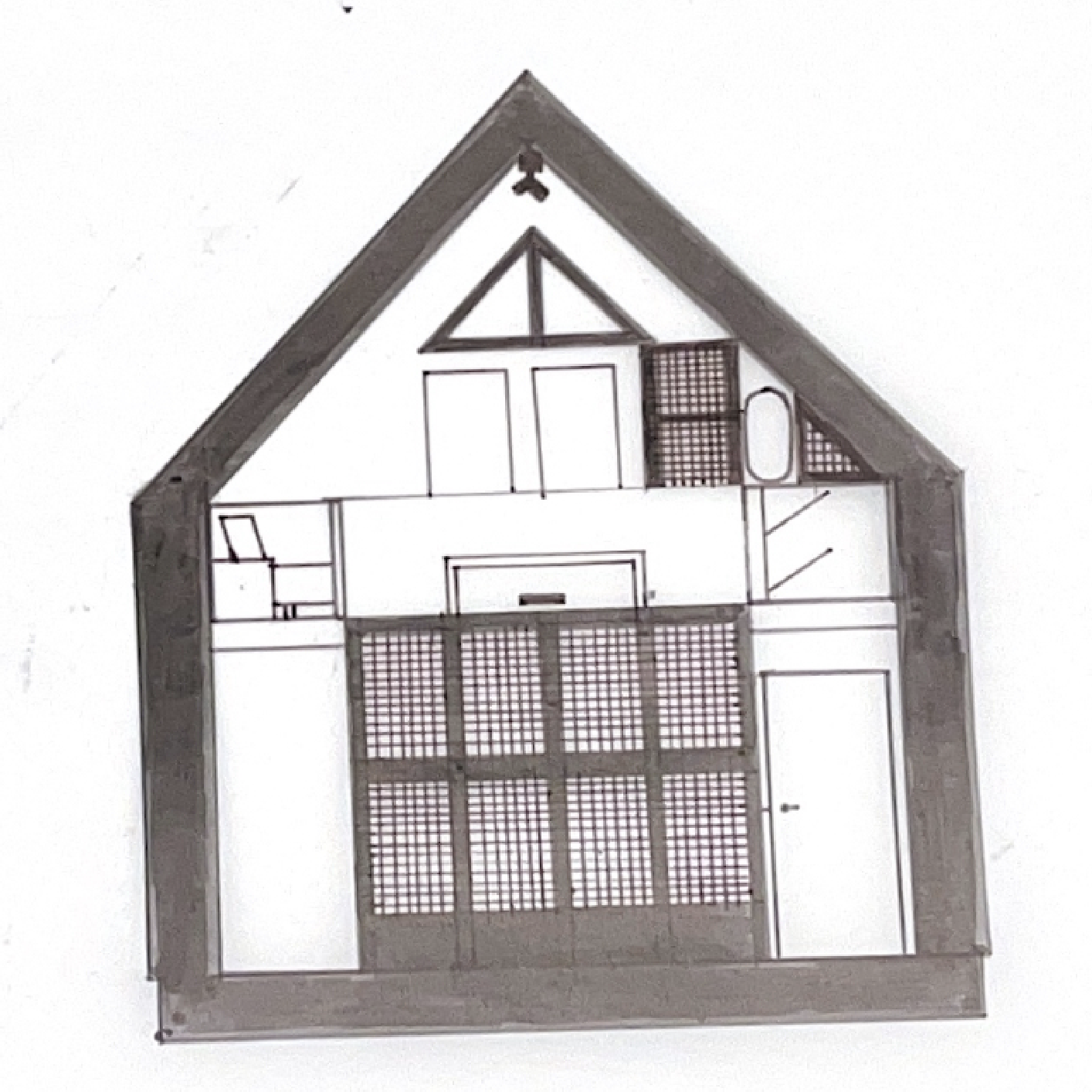
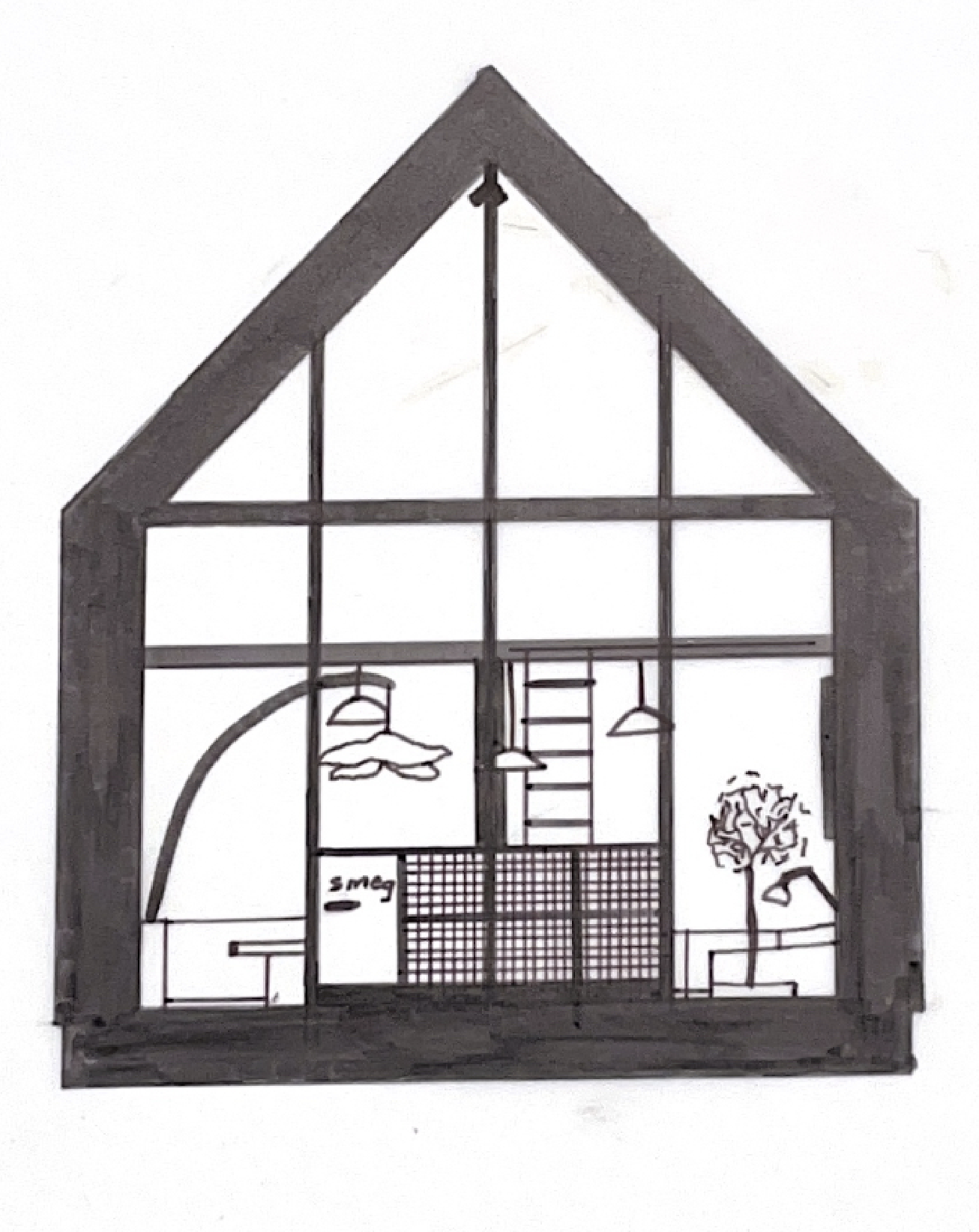
Wa is a Japanese cultural principle emphasizing harmony, understanding, and connection with the people around you. In Japan, hospitality is a core norm, and not just sharing space, but caring for and being with others is valued. To reflect this, I incorporated larger seating areas and a net above the dining and living space, allowing people to gather, relax, and interact. Placed at the largest windows, the net also maximizes the use of space while creating a playful, communal area in the Japanese-inspired retreat.

Japandi & Tadao Ando
Inspiration to design:
Japandi is a well-recognized interior design concept that combines warm materials, colors, and inviting shapes to create cozy, welcoming spaces. For this reason, I chose warm wood that harmonizes with the beige limewash walls and rattan cabinets.
Inspired by Tadao Ando, who emphasizes space through the interplay of light, concrete, and minimalism, I applied his principles by selecting a limewash finish for both walls and floors, allowing the space to shine without unnecessary ornamentation. I also prioritized natural light, situating communal areas—the net, living, and dining spaces—near the largest windows to foster interaction and a sense of openness.
Space analysis
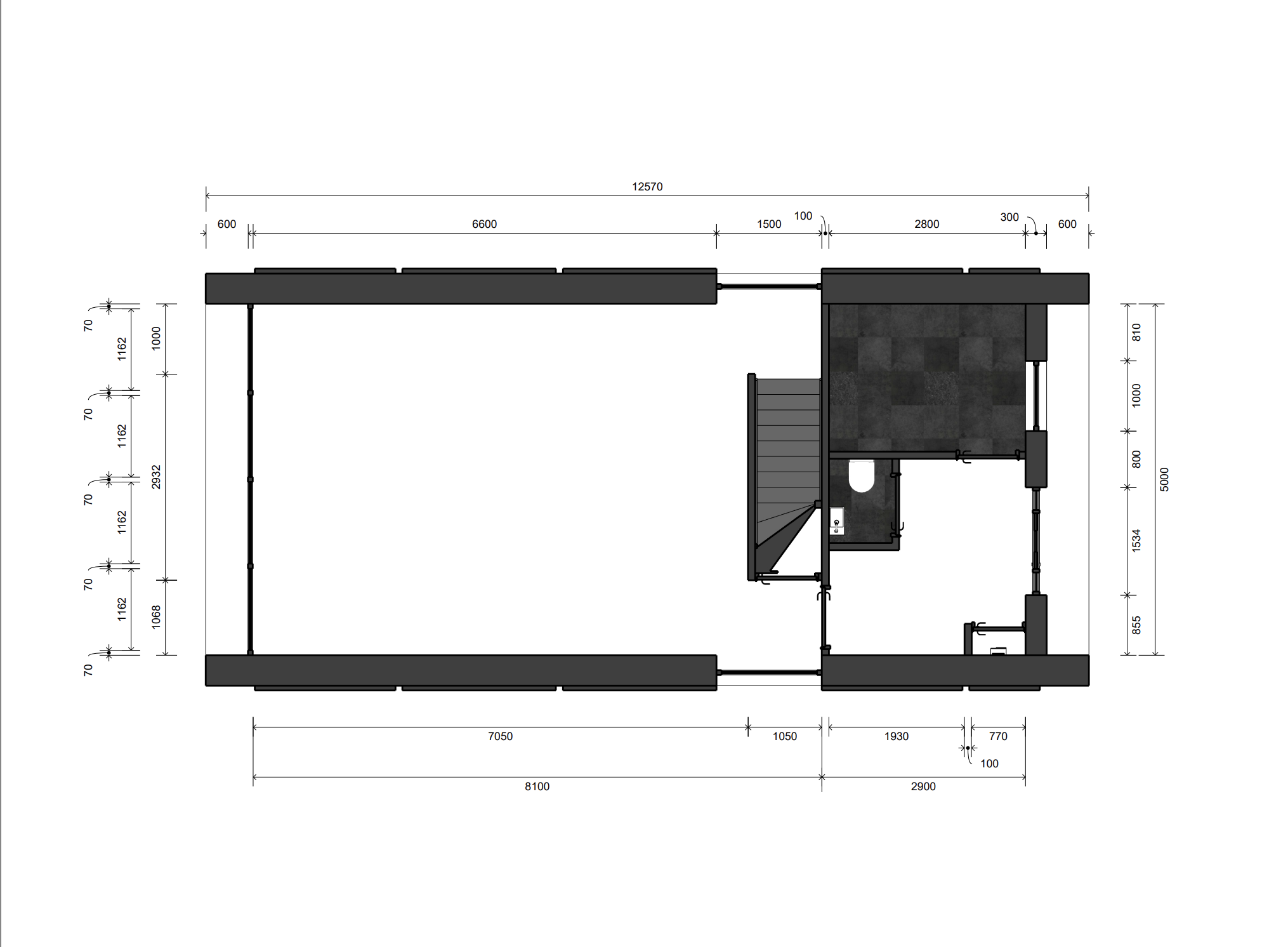
Measurements of the Japanese retreat: First floor
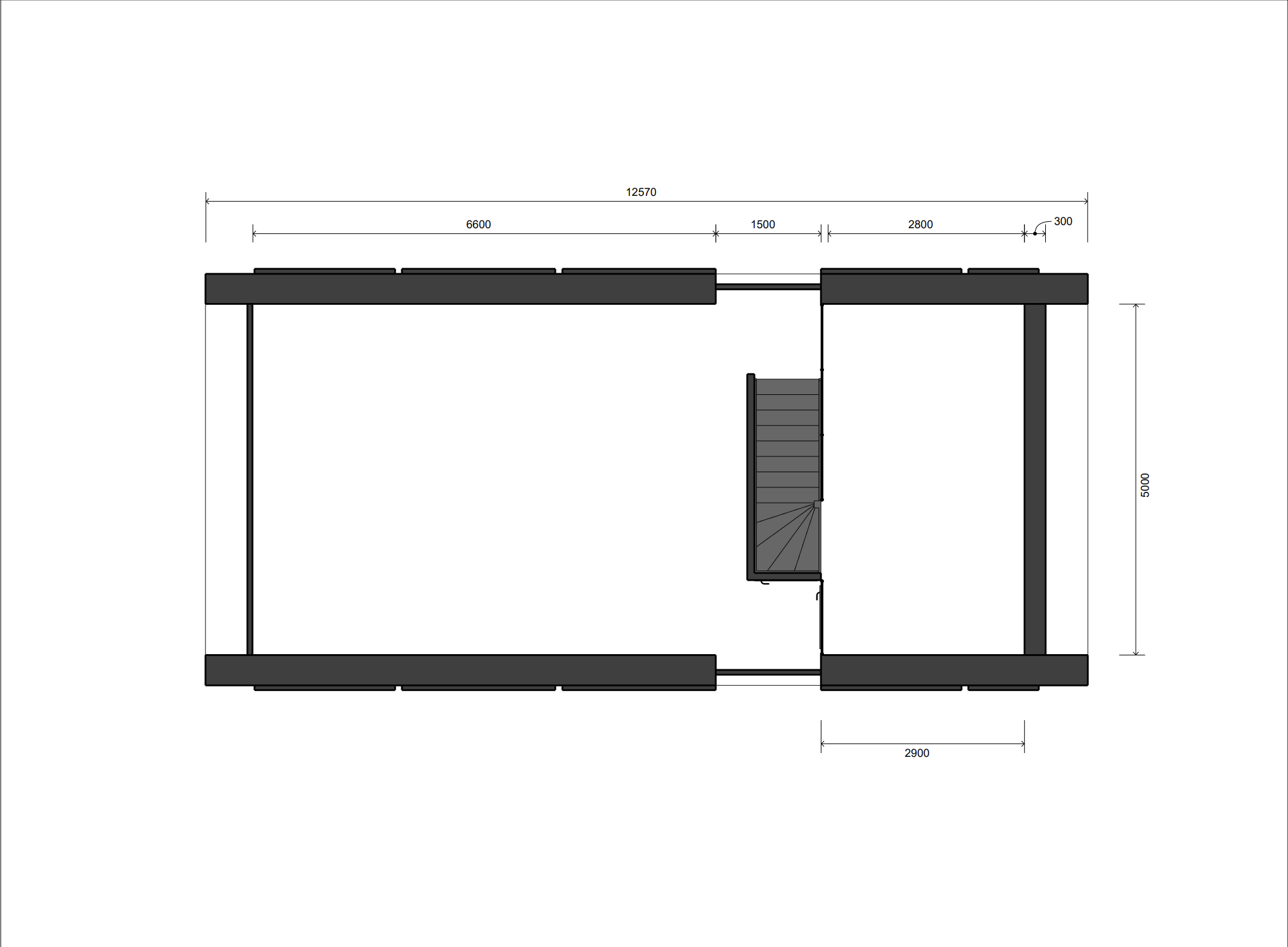
Measurements of the Japanese retreat: Ground floor
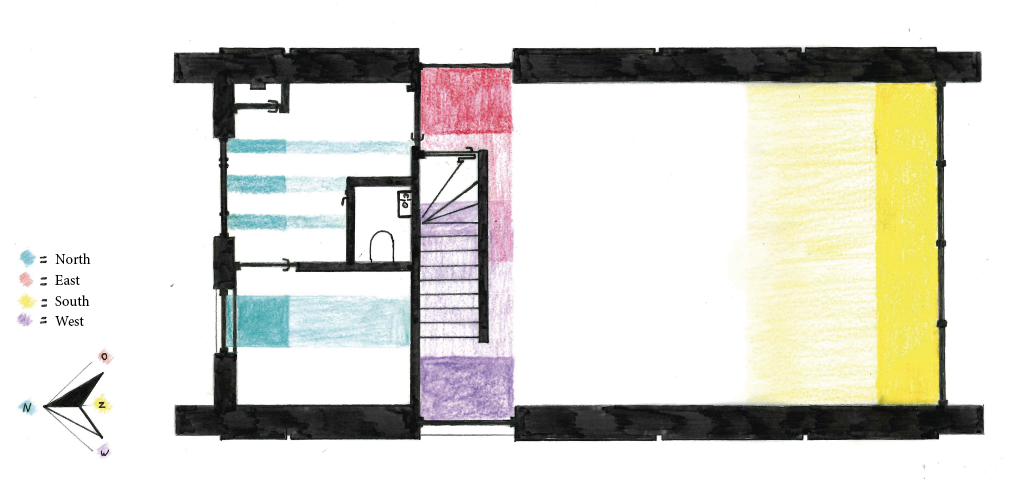
Daylight analysis.Dark coloring = winter sun. Light coloring = summer sun.
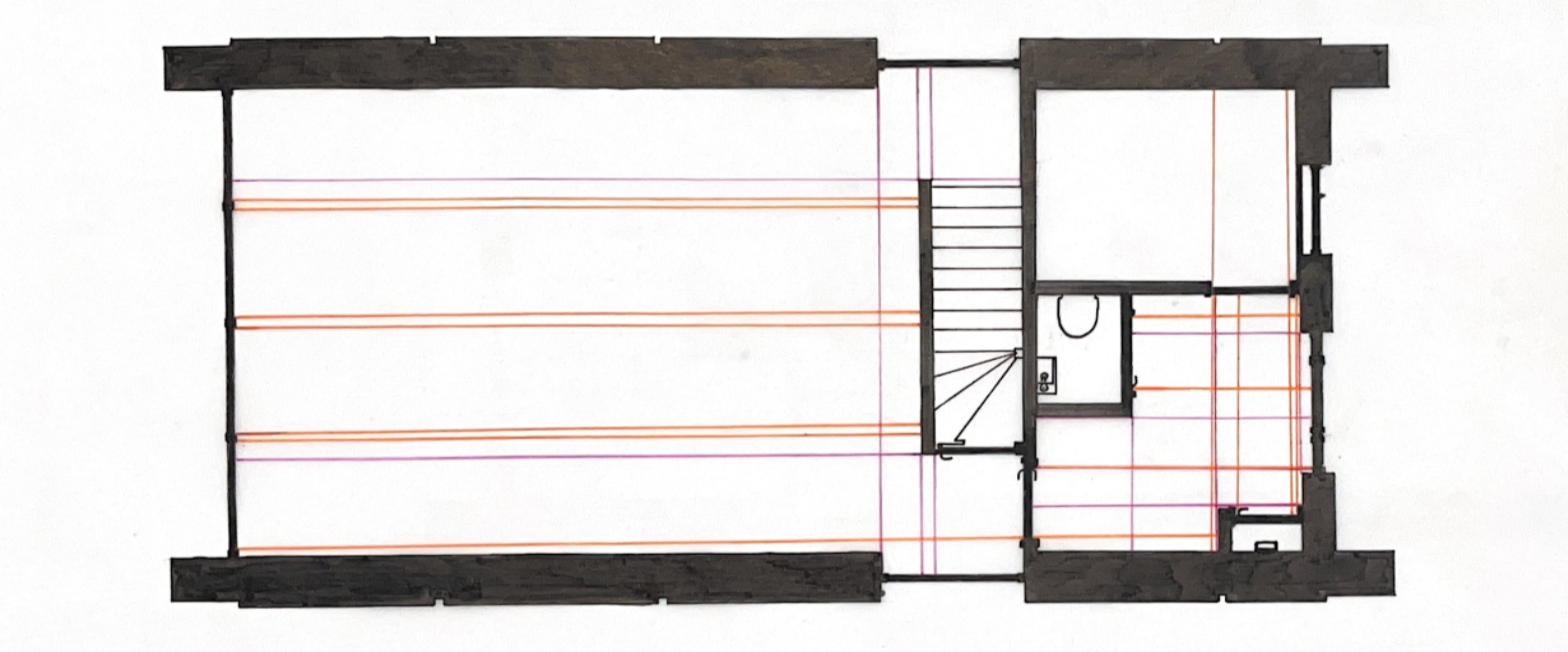
Design line analysisOrange = Windows & doors. Purple = Walls
Layout sketches
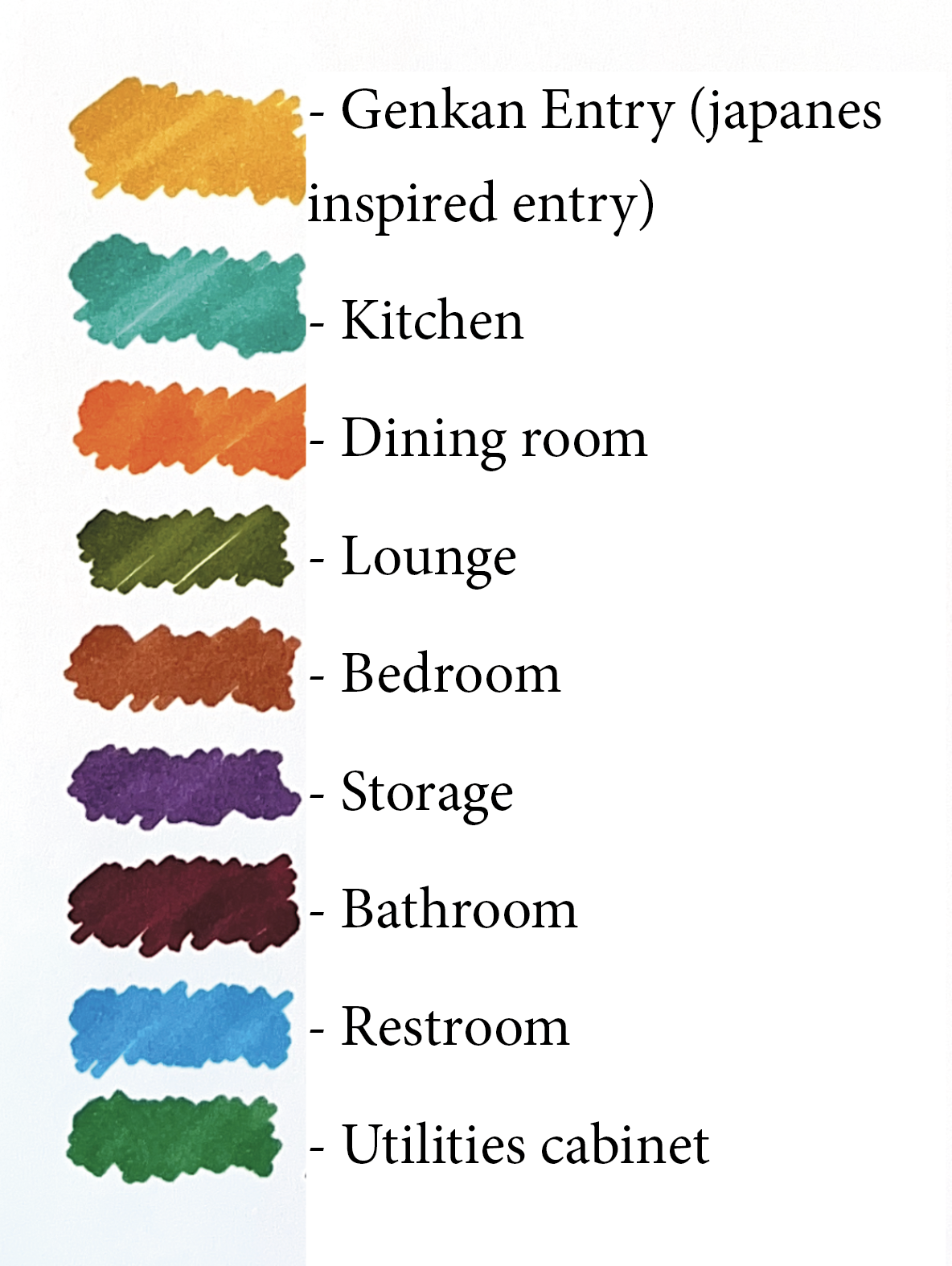
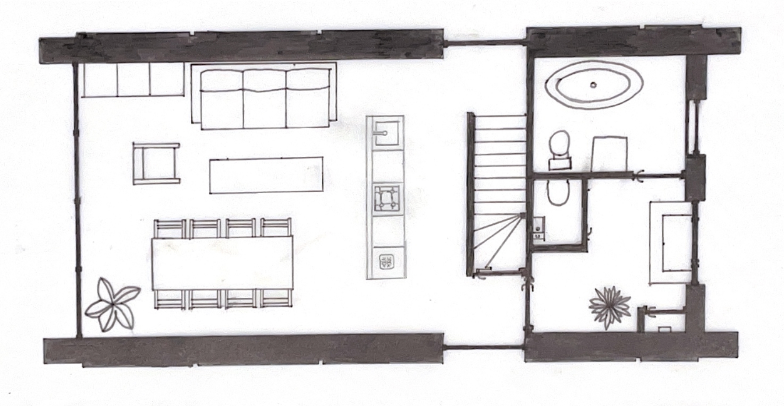
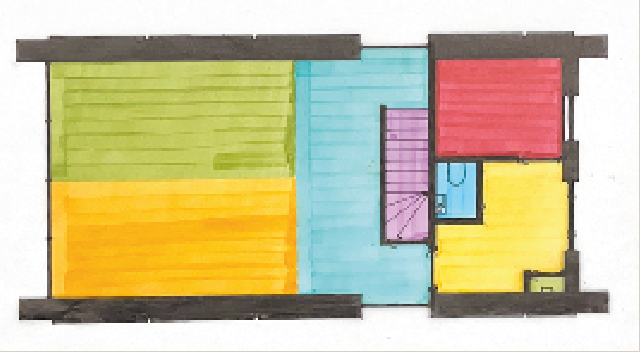
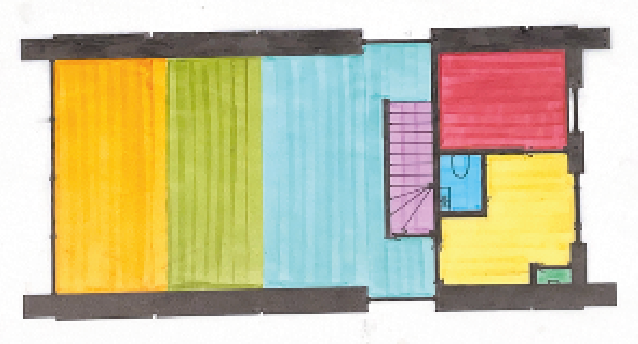
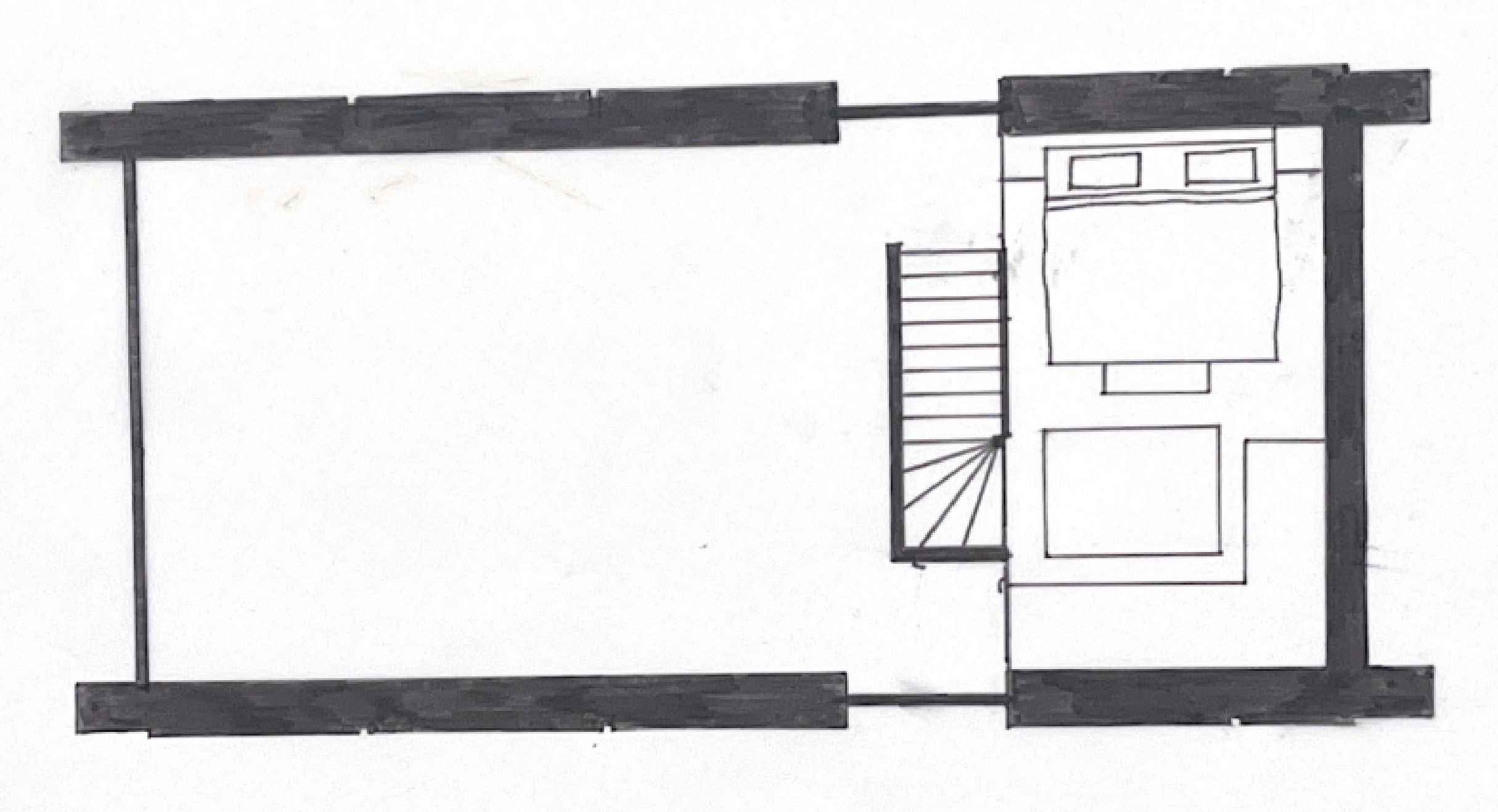
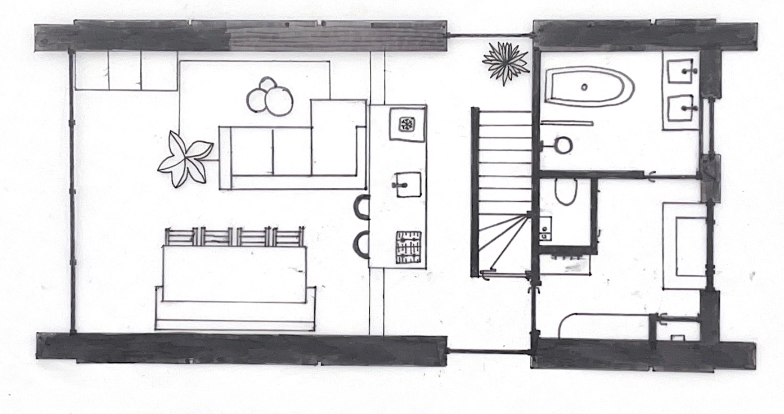
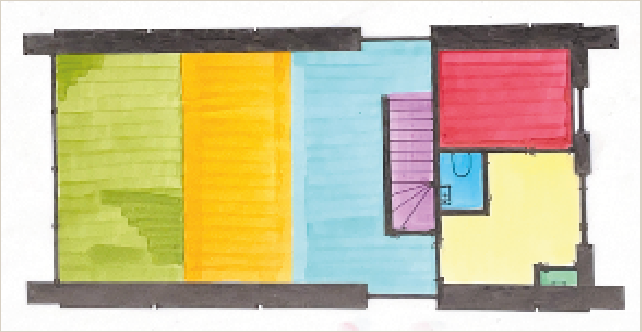
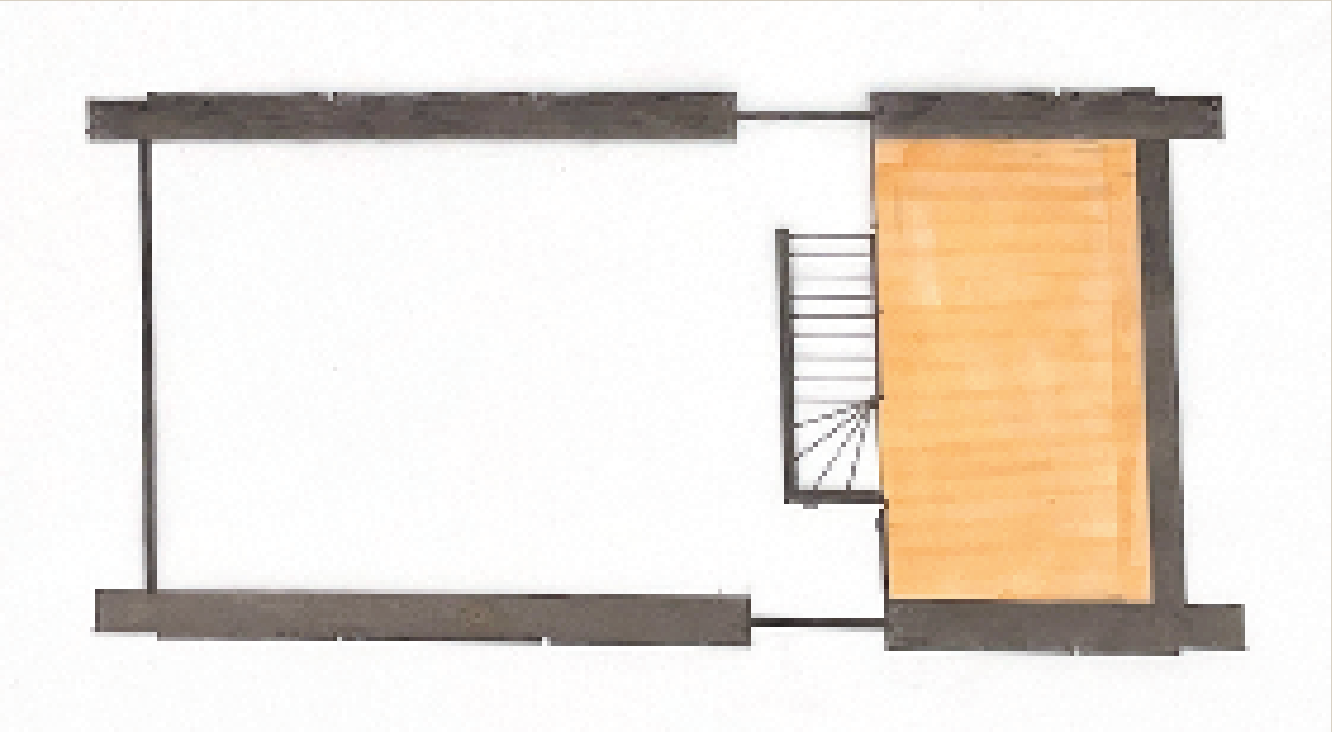
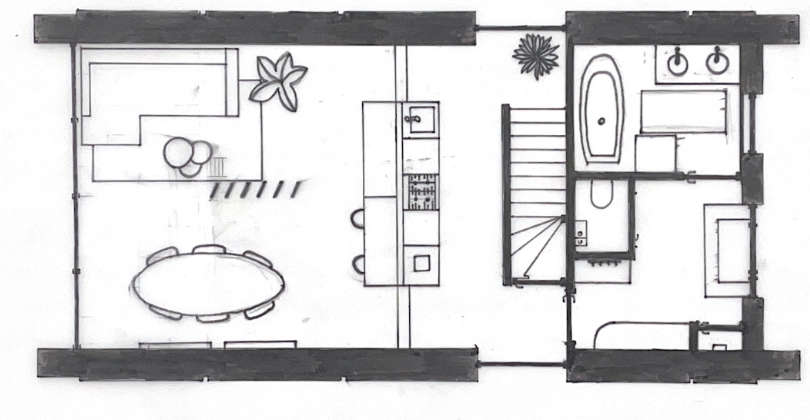
Definitive layout & additional information


Armed Angels
TooGoodToGo
Han & Lotus